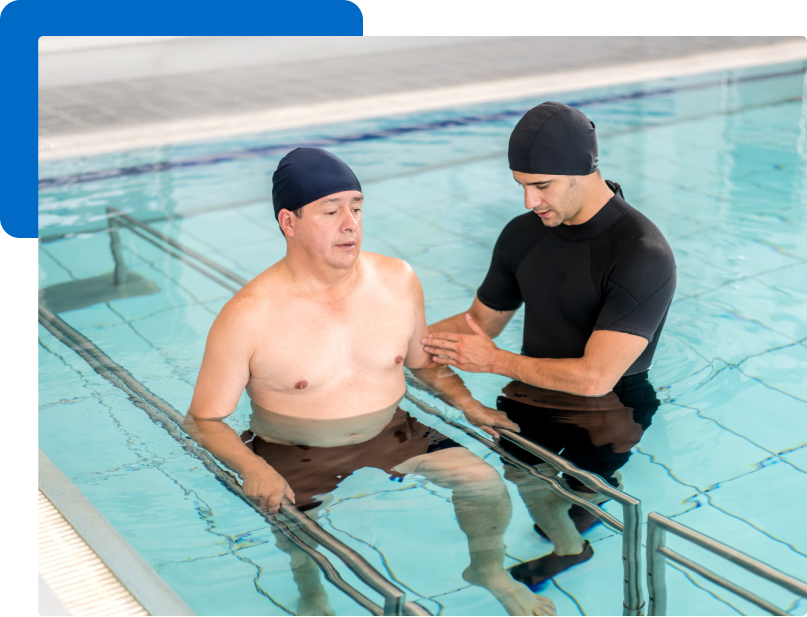
As part of a comprehensive physical therapy program, aquatic therapy uses the natural resistance and buoyancy of water to stimulate muscles and connective tissue, promoting blood flow and reducing pain.
Aquatic therapy is a skilled intervention performed in a pool or other aquatic environment. The buoyancy of the water removes the pressure put on limbs during land-based treatments. This is especially helpful for patients who cannot fully bear the weight needed to successfully complete their plan of care, which further delays healing and progression.
At PT Solutions, our physical therapists are trained and certified in providing treatment plans using aquatic therapy. Your plan will be developed based on your individual needs and goals discussed in our initial evaluation process.
This service is available at select locations. Please contact your preferred clinic for more information.

Aquatic therapy is essentially physical therapy that takes place in a pool. The difference is that in water, there is less impact on joints. The natural properties of water provide an ideal environment for patients who find it difficult to conduct regular treatments.
Aquatic therapy helps patients achieve:
Aquatic therapy is essentially physical therapy that takes place in a pool. The difference is that in water, there is less impact on joints. The natural properties of water provide an ideal environment for patients who find it difficult to conduct regular treatments.
Aquatic therapy helps patients achieve:
Aquatic therapy aids recovery in physical, occupational, sports, and neurological therapy by improving strength, mobility, and coordination in a low-impact, pain-reducing environment.
Aquatic therapy uses the buoyancy and resistance of water during guided physical therapy exercises. Buoyancy reduces the amount of load placed on the body, while water resistance can be used to work on strength, mobility, balance, coordination, and endurance.
Aquatic therapy may be used for people with joint pain, arthritis, knee or hip pain, low back pain, sports injuries, post-surgical recovery, or other conditions that make land-based movement difficult. A physical therapist can determine whether it fits the patient’s plan of care.
Water supports part of the body’s weight, which reduces pressure on the joints during movement. This can make it easier to practice weight bearing, mobility, and strengthening when the same activities are uncomfortable or difficult on land.
A physical therapist develops exercises based on the patient’s evaluation, symptoms, and goals. Sessions may include walking or movement practice, strengthening, balance work, mobility exercises, and endurance activities performed in the water.
No. PT Solutions notes that aquatic therapy is available at select locations. Patients should contact their preferred clinic to confirm that aquatic therapy is offered there and to learn what to expect before the first pool-based session.
If you’re struggling with limited movement or joint pain, aquatic therapy can offer a gentle yet effective treatment. Your physical therapist will assess if it’s the right fit for your recovery.