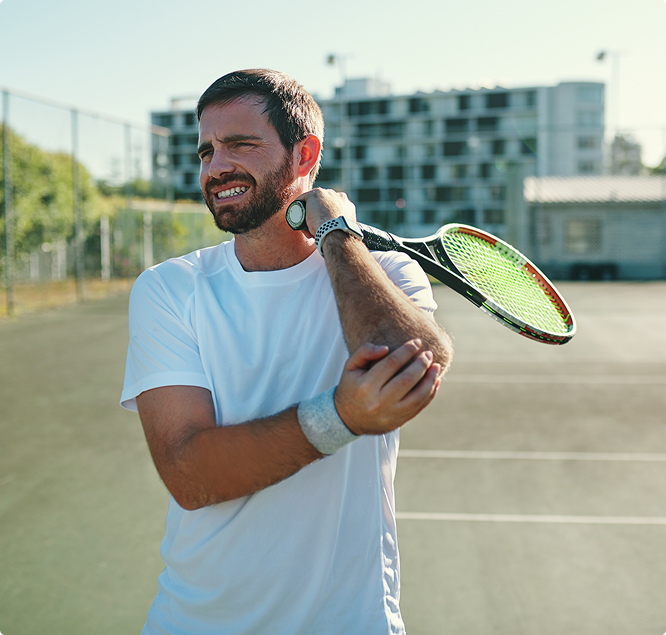
Tennis elbow is a colloquial term used to describe a chronic pain that affects the elbow as a result of overuse. Tennis players are particularly known for developing this condition, as evident by the common name, but they are not alone in experiencing the sensation. Golfers, baseball players, yoga enthusiasts and construction workers are prone to developing the condition, as well as those who frequently participate in activities such as knitting, cooking, cleaning or typing.
Tennis elbow, also known as lateral epicondylitis (acute) or lateral elbow tendinopathy (any time frame) can develop as the result of overuse of the arm, forearm or hand muscles. Frequently the pain of tennis elbow will develop gradually, starting off rather minor but increasing as overuse continues. In some situations, tennis elbow begins as a lingering pain that is left behind after an injury to the tendon surrounding the outside of the elbow.
• Pain that slowly increases around the outside of the elbow
• Pain that is worsened by using grip
• Pain that is made worse by putting pressure on the wrist, such as during stabilizing motions or any other forceful movement.
Lateral Epicondylitis is when inflammation is present in the tendons attached to the lateral epicondyle (the outside bony part of the elbow). It represents the acute phase of the injury, meaning it has been present for less than 2 weeks. If the condition goes untreated, degenerative changes in the tendon result, creating a tendinosis (non-inflammatory changes).
The term tendinopathy is used to indicate that pathology (inflammatory or non-inflammatory) is present in the tendon.
Chronic elbow pain is when the symptoms have been present for longer than one month. Inflammation is no longer present, but instead, the pain is caused by degenerative changes in the tendons.
If you are experiencing pain in your elbow, then you may have tennis elbow. The best thing to do is consult with a physical therapist, as they can help you develop a treatment plan and ensure that there is not another issue that is causing your pain.
The best way to treat tennis elbow is to decrease repetitive strain on the tendons attached to the elbow while completing an appropriate progressive strengthening program designed by a physical therapist. It is important to adjust your activities and avoid actions that worsen your symptoms. Light activities, such as cooking or typing, are fine to continue, even if they cause mild pain.
There are some physical therapy techniques that can be used to reduce pain in the elbow. You should never try any physical therapy activity without guidance from a licensed therapist.
In some cases, icing and over-the-counter pain relievers and ointments can help reduce pain, but they do not address the cause of the symptoms and are generally not as effective as guided physical therapy.

If you are experiencing pain in your elbow, then you may have tennis elbow. The best thing to do is consult with a physical therapist, as they can help you develop a treatment plan and ensure that there is not another issue that is causing your pain.
The best way to treat tennis elbow is to decrease repetitive strain on the tendons attached to the elbow while completing an appropriate progressive strengthening program designed by a physical therapist. It is important to adjust your activities and avoid actions that worsen your symptoms. Light activities, such as cooking or typing, are fine to continue, even if they cause mild pain.
There are some physical therapy techniques that can be used to reduce pain in the elbow. You should never try any physical therapy activity without guidance from a licensed therapist.
In some cases, icing and over-the-counter pain relievers and ointments can help reduce pain, but they do not address the cause of the symptoms and are generally not as effective as guided physical therapy.

A physical therapist may assess elbow motion, wrist strength, grip tolerance, and movements that increase pain. Treatment can include stretching, strengthening, hands-on care, activity changes, and a gradual plan to restore function.
Tennis elbow is usually linked to repeated stress on the tendons that attach forearm muscles to the outside of the elbow. It can happen from sports, gripping, lifting, tool use, or repetitive wrist and hand movements.
Avoid or modify exercises that increase sharp pain, gripping pain, or soreness that lasts after activity. Heavy wrist extension, repeated gripping, or loaded pulling may need to be adjusted until strength and tolerance improve.
The timeline depends on symptom severity, activity demands, and how long the pain has been present. Physical therapy often progresses from pain control and gentle movement to strengthening, grip work, and return to normal activity.
Racquet sports, lifting, and gripping can load the forearm tendons near the outside of the elbow. Orthopedic physical therapy can help improve wrist and forearm strength, elbow tolerance, technique, and return-to-activity progression.
Don’t let tennis elbow keep you from doing what you love. Book an appointment today for professional therapy that enhances your movement, boosts strength, and helps you return to your favorite activities.