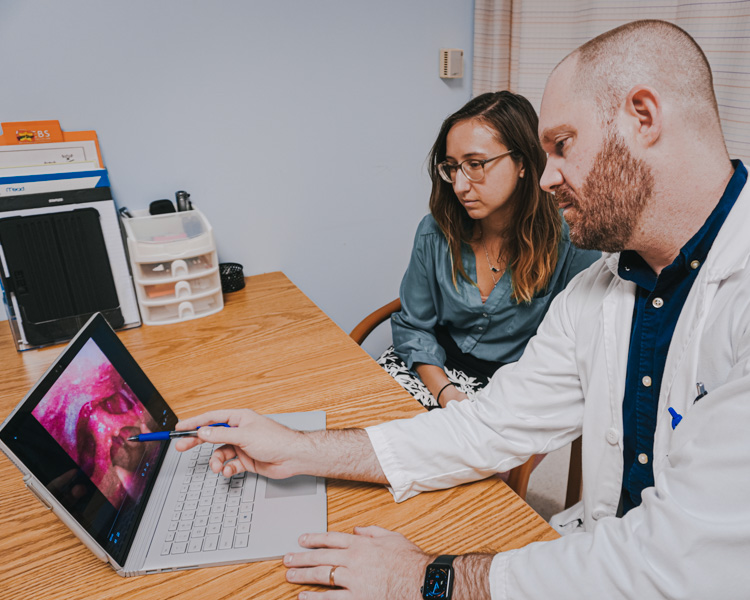
At PT Solutions, our Speech-Language Pathologists (SLP) help patients of all ages with various speech and communication challenges. From children learning to talk to adults whose ability to speak or swallow has been impacted by a stroke, our SLP’s provide comprehensive treatment plans designed to meet each individual’s goals.
As speech and communication disorders vary in complexity from case to case, finding the right answers to your questions can be daunting, leading to further stress and frustration. Our SLP’s, with their knowledge and expertise, will help you understand the condition and provide the guidance you need in between treatments.
This service is available at select locations. Please contact your preferred clinic for more information.

Most people assume speech therapy only deals with the production of sounds. While this is a large part of it, it isn’t the only kind of treatment included in speech therapy. Speech Therapy is designed to treat communication dysfunctions along with swallowing disorders.
Speech Therapy is led by SLPs, also known as speech therapists, who work to prevent, assess, diagnose, and treat speech, language, social communication, cognitive-communication, and swallowing disorders in both children and adults.
Speech therapy can help with speech, language, voice, fluency, cognitive-communication, feeding, and swallowing problems. At PT Solutions, speech-language pathologists work with children and adults and tailor care to the communication or swallowing goals identified during evaluation.
Yes. A stroke or traumatic brain injury can affect speaking, understanding language, memory, thinking, voice, or swallowing. A speech-language pathologist can evaluate which skills have changed and build a rehabilitation plan around communication and daily function.
Yes. Speech-language pathologists can assess and treat swallowing disorders, also called dysphagia, as well as some feeding concerns. Treatment depends on the cause and may include exercises, strategies, and education to support more effective eating and drinking.
A speech-language pathologist reviews symptoms, medical history, communication or swallowing concerns, and personal goals. The evaluation may look at speech, language, voice, fluency, cognition, feeding, or swallowing depending on the reason for the visit.
No. Speech therapy can support both children and adults. Children may need help with speech or language development, while adults may receive therapy after a stroke, brain injury, neurological condition, or changes in swallowing or communication.
At PT Solutions, our speech therapists work closely with patients to create personalized, non-invasive treatment plans that help restore function and improve pronunciation and clarity.