Find Pain Relief

Physical Therapy for Hip Pain

Hip pain refers to discomfort in the groin, outer hip, or surrounding musculature that can affect walking, stair climbing, and lower extremity movement. Physical therapy addresses hip pain by strengthening the muscles that support the hip joint, improving joint mobility, and correcting movement patterns that contribute to pain and instability

Understanding Hip Pain

Hip Pain

At PT Solutions, our therapists at PT solutions are well versed in the anatomy of the hip and all of the potential structures that may be referring your pain. In addition, they will be able to analyze your movement patterns to determine the most likely original cause of the pain. Hip pain is rarely just the hip, as the low back is often the frequent contributor of developing pathology.

Understanding Hip Pain

Common Causes & Symptoms Of Hip Pain

Patients with hip pain may experience a variety of issues, including tenderness, limping, and joint pain. The causes of hip pain can vary from injuries, nerve irritation, or other conditions including but not limited to:

  • Osteoarthritis
  • Rheumatoid arthritis
  • Sciatica
  • Sprain
  • Bursitis
  • Tendinopathy
  • Total Hip Arthroplasty Rehabilitation
  • Hamstring Strain
  • Hip Flexor Strain
  • Gluteal Tendinitis
  • Femoral Acetabular Impingement (FAI)

Understanding Hip Pain

Common Causes & Symptoms Of Hip Pain

Patients with hip pain may experience a variety of issues, including tenderness, limping, and joint pain. The causes of hip pain can vary from injuries, nerve irritation, or other conditions including but not limited to:

  • Osteoarthritis
  • Rheumatoid arthritis
  • Sciatica
  • Sprain
  • Bursitis
  • Tendinopathy
  • Total Hip Arthroplasty Rehabilitation
  • Hamstring Strain
  • Hip Flexor Strain
  • Gluteal Tendinitis
  • Femoral Acetabular Impingement (FAI)

Understanding Hip Pain

How We Treat Hip Pain

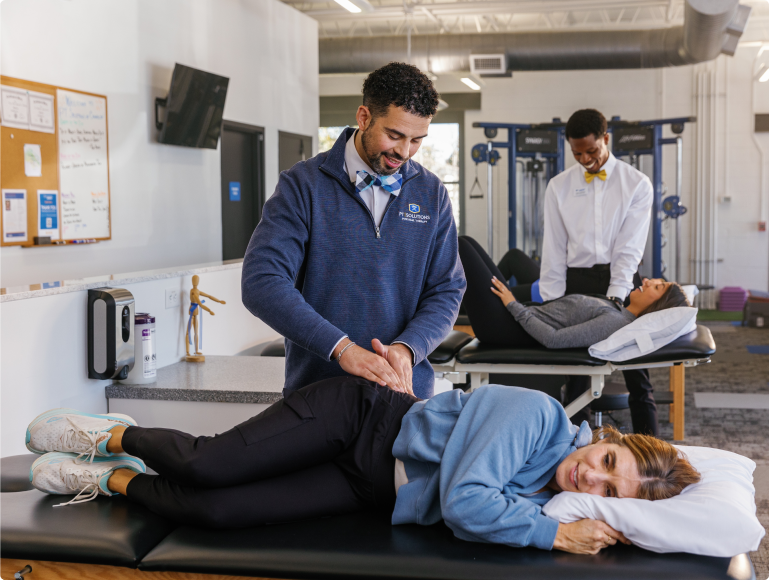
At PT Solutions, we use a combination of manual therapy techniques and exercises to help patients return to their daily activities. Our treatment process focuses on using soft tissue and joint mobilizations to restore proper joint mechanics and muscle activation. As patients progress, we focus on building strength and stability throughout the lower body to restore function and reduce the risk of re-injury.

Find Pain Relief with Physical Therapy

Treatments at PT Solutions

Orthopedic Physical Therapy

We diagnose and treat conditions affecting the musculoskeletal system, including bones, joints, muscles, and ligaments.

Physical Therapy

Physical therapy helps restore movement and manage pain after an injury, surgery or illness. It also helps people dealing with chronic conditions that affect their ability to perform everyday activities.

Sports Physical Therapy

This is a specialized branch of physical therapy focused on preventing, managing, and rehabilitating injuries related to sports and exercise while enhancing athletic performance.

Occupational Therapy

We help people adapt in relation to pain, injuries, illnesses, and disabilities that may make it difficult to carry out everyday tasks.

Pre and Post Surgery Physical Therapy

Prepare for surgery and recover faster with expert pre and post-surgery Physical Therapy. Build strength, control pain, and return to full function safely.

Athletic Training

Athletic Training focuses on prevention, diagnosis, treatment, and rehabilitation of acute, chronic, and emergent injuries or medical conditions in physically active individuals (athletes and non-athletes).

Take The First Step

Discover Physical Therapy for Hip Pain

At PT Solutions, expert physical therapists near you use a personalized, evidence-based approach to help you move better and feel better—without relying on medication or surgery.

Take The First Step

Discover Physical Therapy for Hip Pain

At PT Solutions, expert physical therapists near you use a personalized, evidence-based approach to help you move better and feel better—without relying on medication or surgery.

Hip Pain FAQs

Hip joint pain can come from arthritis, injury, tendon irritation, muscle strain, bursitis, or other conditions. Pain in the groin often points closer to the hip joint, while pain on the outside of the hip may involve muscles, tendons, or soft tissue.

Walking can help some types of mild hip pain by keeping the joint moving and supporting strength. If walking increases pain, limping, or stiffness, a physical therapist can help adjust activity and build a safer movement plan.

Hip pain should be checked if it follows a fall, limits walking, gets worse, or does not improve. Pain with swelling, fever, redness, major weakness, or trouble bearing weight should be evaluated promptly.

Physical therapy for hip pain may include strength training, mobility work, stretching, balance exercises, and movement retraining. The goal is to improve how the hip, core, and legs work together during daily activity.

Yes. Hip pain can make running, lifting, jumping, walking, or changing direction harder. Rehab may focus on hip strength, control, flexibility, and sport-specific movement so the body can handle activity with better mechanics.

Find a Clinic